Evolution of the Liberian Vote
From restricted property-based franchises to universal suffrage, trace the dramatic history of democracy and governance in Africa's oldest modern republic.
Visualizing History
Explore the defining eras of Liberian electoral history through these detailed infographics.
Did You Know? Liberian Election Facts
Fascinating historical trivia and milestones that have shaped the nation's political landscape over time.
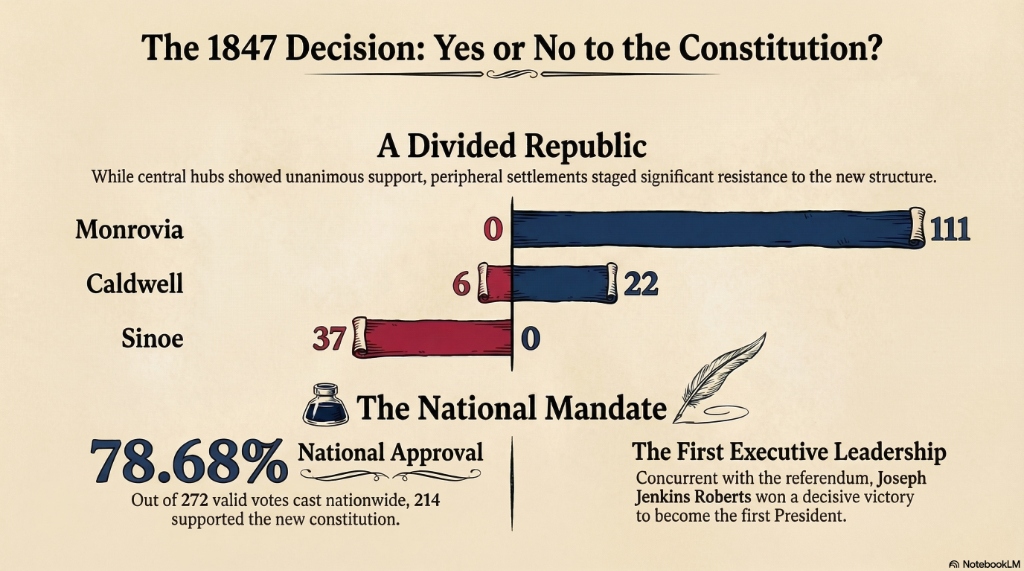
The Century of Dominance: The TWP Era
A deep dive into the 102 years of uninterrupted rule by the True Whig Party (1878–1980).
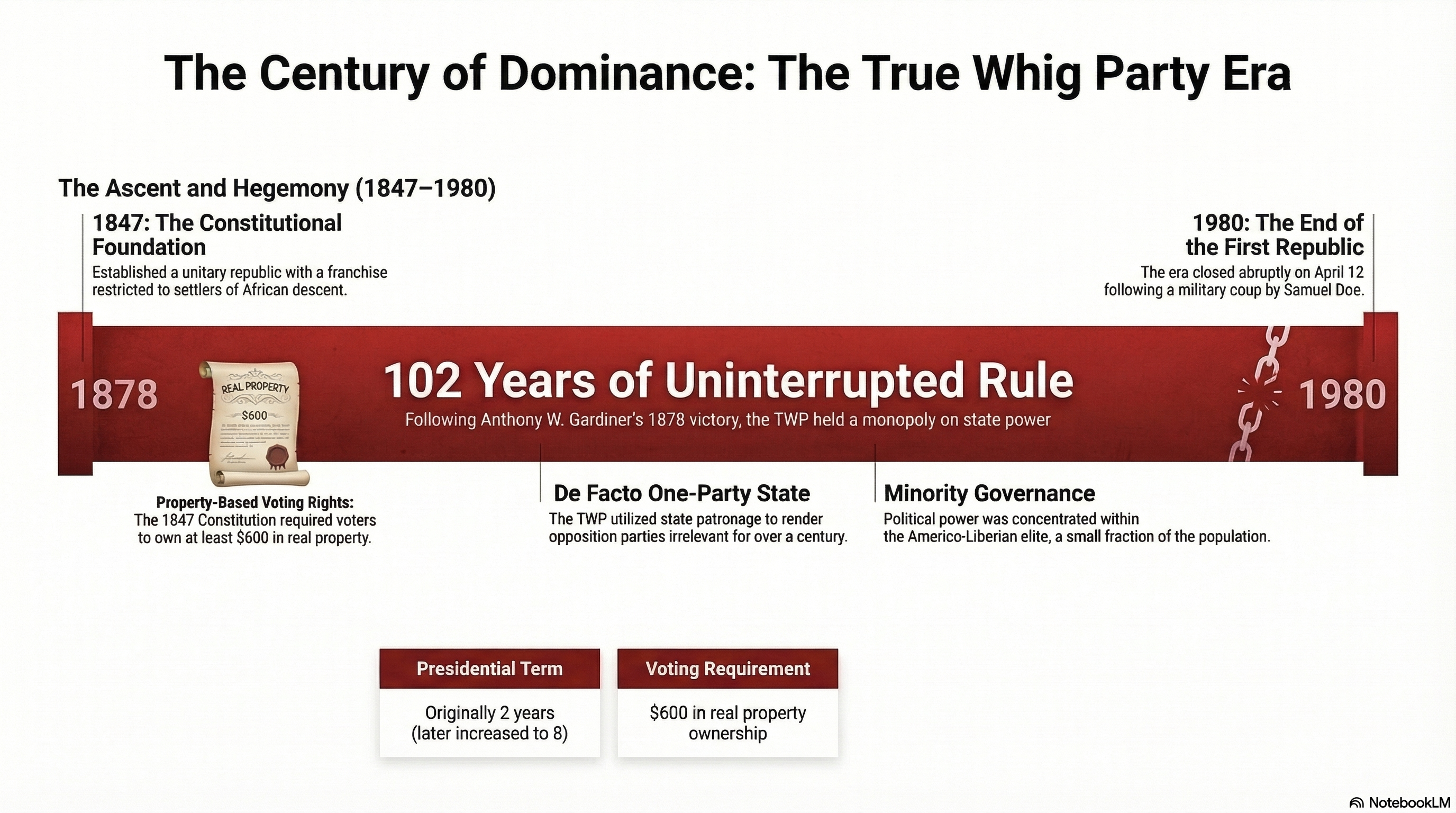
The Evolution of the Liberian Vote
Tracking the expansion of voting rights from 1847 to present day.
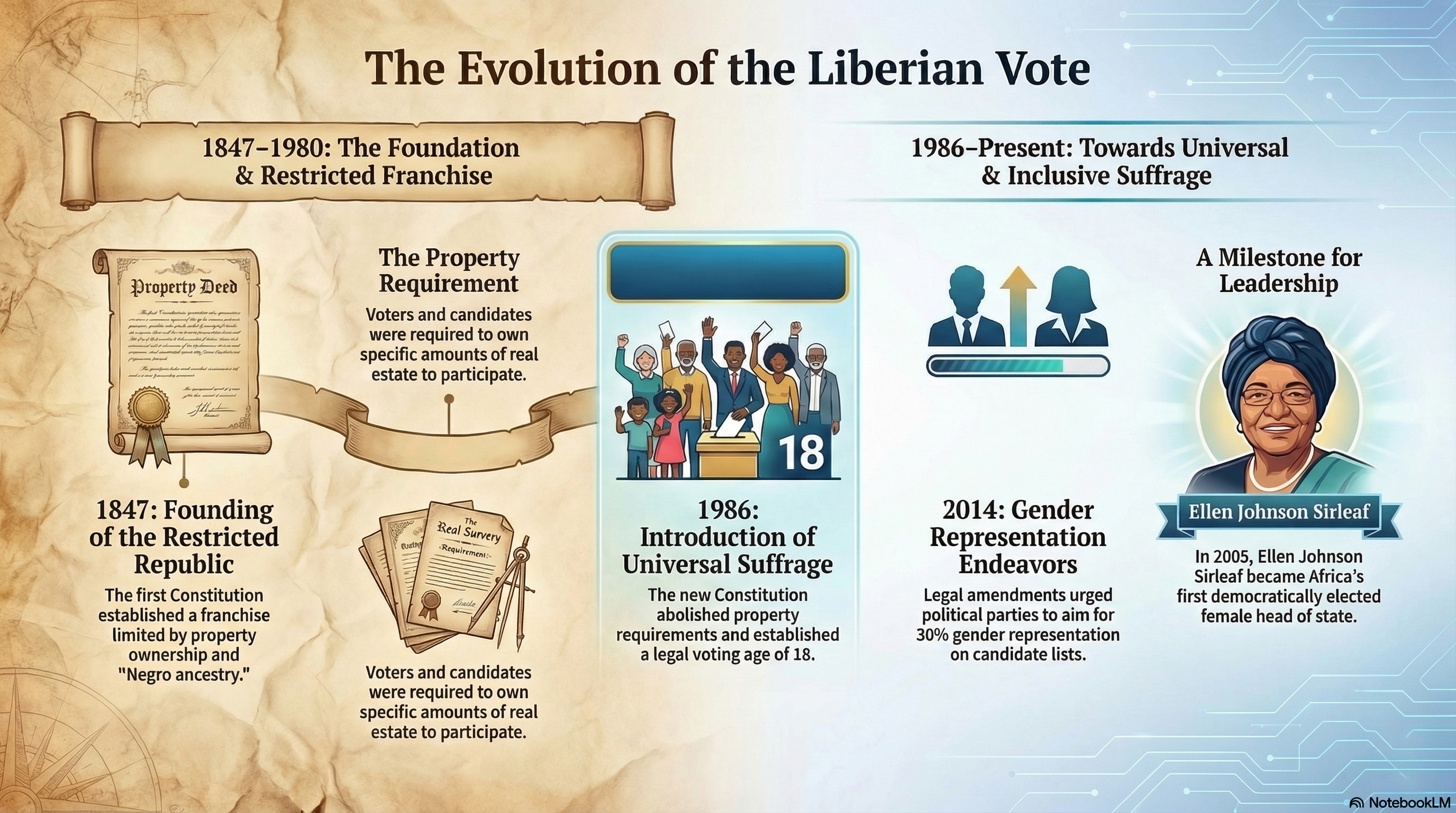
Did You Know?
Key milestones that shaped the nation's democratic framework.
The Constitutional Foundation
The first Constitution established a franchise limited by property ownership ($600 in real estate) and "Negro ancestry." It created a unitary republic restricted to settlers of African descent.
Formation of the True Whig Party
Founded primarily by darker-skinned Americo-Liberians from the interior settlements who felt marginalized by the lighter-skinned elite of the Republican Party, setting the stage for a century of political dominance.
Dawn of the True Whig Era
Following Anthony W. Gardiner's victory, the True Whig Party (TWP) established an uninterrupted monopoly on state power, creating a de facto one-party state through state patronage and minority governance by the Americo-Liberian elite.
End of the First Republic
The 102-year dominance of the TWP ended abruptly on April 12 following a military coup by Samuel Doe, dismantling the original constitutional framework.
Universal Suffrage & the Second Republic
A new Constitution was introduced, officially abolishing the historical property requirements and establishing a legal voting age of 18, paving the way for a more inclusive democracy.
The Civil Wars & Transitional Governance
A devastating 14-year period of civil conflict severely disrupted the democratic process, leading to the collapse of state institutions and a fractured electoral landscape.
The Special Elections
Held under the proportional representation system as part of a peace agreement, Charles Taylor won a landslide victory in an election largely driven by a desire to end the ongoing conflict.
A Milestone for Leadership
Ellen Johnson Sirleaf was elected following the end of the civil wars, becoming Africa's first democratically elected female head of state.
Pushing for Representation
Legal amendments urged political parties to aim for 30% gender representation on candidate lists, reflecting ongoing efforts toward systemic equality.